
When Do You Need a Dental Crown? 7 Signs It’s Time


Many people hear the word dental crown and feel worried. Some think it means a serious problem. Others think it is only for looks. But a crown is actually a very common and helpful dental treatment.
A crown for tooth is used when a tooth becomes weak and cannot stay safe on its own. The goal is not to cover the tooth for looks, but to save it from breaking or getting worse.
If you understand when you need a crown, you can take action early and protect your natural tooth for many years.
Let’s go step by step and understand this in a very simple way.
What Is a Dental Crown?
A dental crown is a strong cover that sits on top of your tooth.
Think of it like this:
If your phone screen cracks, you put a strong case on it to stop more damage. A crown works the same way for your tooth.
A crown:
- Covers the whole tooth
- Makes a weak tooth strong again
- Helps you chew food safely
- Stops cracks from spreading
- Protects the tooth from future damage
Crowns are made from different materials. Some are chosen because they look natural, and some because they are very strong. The right choice depends on where the tooth is and how much pressure it takes.
When Do You Need a Crown?
A very common question is: when do you need a crown instead of a filling?
You need a crown when:
- The tooth is weak
- A large part of the tooth is damaged
- The tooth may break if left uncovered
A filling only fixes a small hole.
A crown protects the entire tooth.
If the tooth cannot protect itself anymore, a crown for the tooth is the safest solution.
7 Clear Signs You May Need a Dental Crown
Now let’s talk about the most important part, the signs. These are the real signs people notice in daily life.
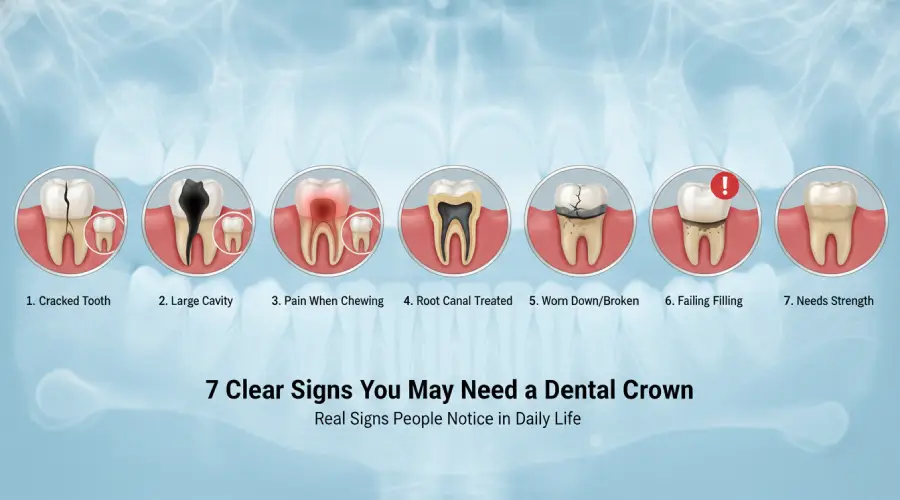
1. You Have a Cracked or Fractured Tooth
A cracked tooth does not always look serious, but it can be dangerous if ignored.
Cracks can happen because of:
- Chewing ice or hard food
- Grinding teeth at night
- An accident or fall
- Old fillings weakening the tooth
Some cracks are so small that you cannot see them. You might experience discomfort when you bite or chew.
A cracked tooth crown helps by:
- Holding the tooth together
- Stopping the crack from growing
- Preventing the tooth from breaking fully
If a cracked tooth is not treated early, it may need removal later.
2. You Have a Large Cavity or Deep Tooth Decay
Minor cavities can be normally repaired with basic filling; however, when the damage is extensive, it causes major destruction of the tooth. This makes the tooth weak and prone to breaking in the ordinary course of chewing. A normal filling may fail to contain this case, and the tooth may crack or collapse around it.
A tooth crown offers total coverage and support to the weakened tooth, saving it and returning its strength. Due to extreme decay, food may stick between the teeth, one may experience pain when taking sugary food, or even have a bad smell in their mouth, resulting from the rotting of the tooth. The solution to these issues using a crown avoids more damage, and the tooth will still be able to do its duties.
Understanding how to manage cavities early is essential, as outlined in resources on the best way to get rid of cavities and common cavity myths, which explain how decay progresses and why crowns become necessary when the tooth structure is compromised.
3. Pain When Chewing or Biting Food
When one experiences pain when chewing or biting, it is a clear indication that a tooth can be damaged. This kind of pain is not ordinary and must be disregarded. In many cases, it may signify some latent crack, internal injury within the tooth, or simply weak tooth walls that are facing difficulties with the pressure of chewing. Due to the fact that the pain is occasional, some individuals are not aware of the intensity of the issue until the tooth is more severely affected.
A crown for tooth provides support by holding the tooth together and distributing the pressure evenly across its surface. This not only strengthens the tooth but also reduces discomfort while eating, protecting the tooth from breaking further. Understanding the causes of tooth pain and how to address them is important, and resources like how to help a toothache explain ways to identify and manage these problems before they worsen.
4. You Had a Root Canal Treatment
After a root canal, the tooth becomes dry and weak because it no longer has nerves or a blood supply.
This makes the tooth easy to crack.
That is why dentists usually recommend a crown for a tooth after root canal treatment, especially for back teeth.
Without a crown:
- The tooth can break suddenly
- The root canal treatment may fail
- You may lose the tooth completely
A crown protects the treated tooth and helps it last longer.
5. Your Tooth Is Worn Down or Broken
Over time, teeth may gradually deteriorate, weakening their structure. A tooth may get worn out or broken as a result of nighttime grinding, acid from food and beverages, aging naturally, or an unintentional injury. When biting or chewing, worn teeth can feel sensitive and frequently appear flatter or shorter than normal.
A crown for tooth restores the original shape of the tooth, making it easier to chew and protecting it from further damage. By covering and supporting the worn tooth, a crown prevents additional wear and helps maintain proper bite alignment. Understanding how tooth erosion affects your teeth and the importance of protecting them can be found in resources about tooth erosion at the gum line, which explain how wear progresses and why crowns become necessary for long-term protection.
6. Old Fillings Are Cracking or Failing
Fillings can deteriorate over time and are not permanent. They might break, become loose, or let bacteria into the tooth as they get older. When this occurs, decay may form beneath the filling, weakening the tooth even more and increasing its vulnerability to harm.
A crown for tooth provides stronger and longer-lasting protection compared to an old filling. By covering the entire tooth, a crown reinforces its structure, prevents further decay, and ensures the tooth can continue to function properly. The risks of untreated decay under existing fillings are explained in detail in tooth decay under crown black color, showing why crowns become necessary when a tooth is compromised.
7. The Tooth Needs Strength, Not Just a Better Look
Although some teeth may seem uneven, chipped, or discolored, the issue is frequently more complex than that. Even if a tooth has a poor appearance, it may be weak underneath. Dental bonding and whitening are two procedures that can make a tooth look better, but they don’t make it stronger or prevent it from breaking.
When a tooth is damaged or structurally weak, a crown for tooth is the better option. A crown covers the entire tooth, reinforces its structure, and ensures it can handle everyday chewing and biting without risk of further damage. For teeth that only have minor cosmetic concerns and remain strong, alternatives like veneers or bonding may work, but these solutions do not provide the same level of protection as a crown. A detailed comparison of these options can be found in veneers vs bonding comparison.
When a Dental Crown Is NOT Needed
Not every tooth problem needs a crown.
You may not need a crown if:
- The cavity is small
- The chip is tiny
- The tooth is still strong
- The issue is only about appearance
A good dentist always tries to save as much natural tooth as possible.
What Happens If You Delay Getting a Crown?
Delaying a needed crown can lead to:
- Bigger cracks
- Sudden tooth break
- Infection
- Tooth removal
Many teeth could have been saved if treated earlier.
Can You Prevent Needing a Dental Crown?
Many dental crowns can be avoided by taking simple steps to keep teeth strong. Preventing damage early helps teeth last longer and reduces the need for a crown for tooth.
It’s important to address cavities immediately when they are first noticed. Small cavities can be repaired before they weaken the tooth, which aligns with the principles explained in best ways to prevent dental problems. Similarly, using fluoride treatments helps strengthen enamel and protects against decay that could eventually require a crown, as detailed in fluoride treatment for tooth decay.
The timely replacement of old fillings helps to avoid the weakened areas where the decay may develop, and this is one of the reasons why the crowns will be required later. Consumption of hard foods such as ice, nuts, or hard candies should be avoided to ensure that teeth are not cracked or chipped, which would require coverage. In case teeth become worn out due to grinding, the use of a night guard lessens stress on the enamel and prevents the teeth from being too weak to justify the use of a crown.
The next best method of detecting the problems early in their progression, be it a small hole, a worn filling, or cracks, is by visiting the dentist on a regular basis. With the combination of early treatment, preventive habits, and preventive care, a number of teeth are able to remain strong without the need to have a crown at all.
Conclusion
As opposed to being purely a cosmetic solution, a dental crown is an effective method of preserving and safeguarding a weak, damaged, or threatened-to-break tooth. Early intervention will help you to treat the conditions before they lead to pain, additional damage, and more complex treatment in the future, as you will know when you need a crown.
Crowns can give you strength, better functionality, and support your natural teeth over a long period of time. Your tooth may be weak, have cracks, and be painful to chew. In this case, do not wait. The process becomes easier, effective, and less stressful when done early through evaluation and treatment. By caring about your teeth today, you will have a healthier, stronger smile, and you will live longer.
Care at AL Dental Studio
FAQs
1. How long does a tooth crown last?
With the right maintenance, a tooth crown can typically last 10 to 15 years. Regular dental checkups and good oral hygiene can prolong its life even further.
2. Is it painful to get a crown?
Typically, receiving a crown is painless. You might feel some pressure but no pain because dentists numb the area. Following the procedure, any discomfort is transient.
3. What is the cost of crowning a tooth?
A crown for a tooth can cost anywhere from $800 to $2,500, depending on the location and type of material.
4. How much is 1 crown of teeth?
A single crown generally costs between $800 and $2,500, depending on whether it’s porcelain, ceramic, or metal.
5. What's the cheapest way to replace one tooth?
The most affordable option for a single missing tooth is usually a dental bridge or a removable partial denture, though implants or crowns offer longer-lasting results.
6. Can you eat normally with a crown?
Yes, a crown for tooth restores normal chewing function. Avoid very hard foods immediately after placement, but most people can eat normally once it settles.
7. What are signs I need a crown?
Common signs include:
- Cracked or broken tooth
- Large cavities or deep decay
- Pain when chewing or biting
- Weak or worn-down tooth
- Old fillings failing
- Teeth that are weak but look fine

Dr. Alexander Heifitz (Author)
Dr. Alexander Heifitz is the founder of AL Dental Studio in NYC, where he combines advanced dental expertise with a patient-first approach. He specializes in cosmetic and restorative treatments such as dental implants, veneers, Invisalign, and smile makeovers, helping New Yorkers achieve both oral health and confidence.

Booking An Appointment
Looking for a reliable dentist in Downtown NYC? Whether you need a routine cleaning, urgent care, or a full smile transformation — we’ve got you covered. We accept most PPO insurance plans and offer flexible scheduling.
+1 (212) 430-3888
Call for appointment
Walk-ins Welcome / Same-Day Appointments Available